The Smoke in Sura 44 (Dukhan) – A Quranic Analysis
By Azhar Khan
Executive Summary
Quran smoke prophecy in Verse 44:10–15 of the Quran describes a visible smoke that appears “on the day” the sky brings it forth. The smoke envelops a defined people, causes painful suffering, leads them to implore relief, and occurs after a clarifying messenger had already come and been rejected as “well educated, but crazy” (44:14). The text further states that the affliction is relieved, followed by a return to denial.
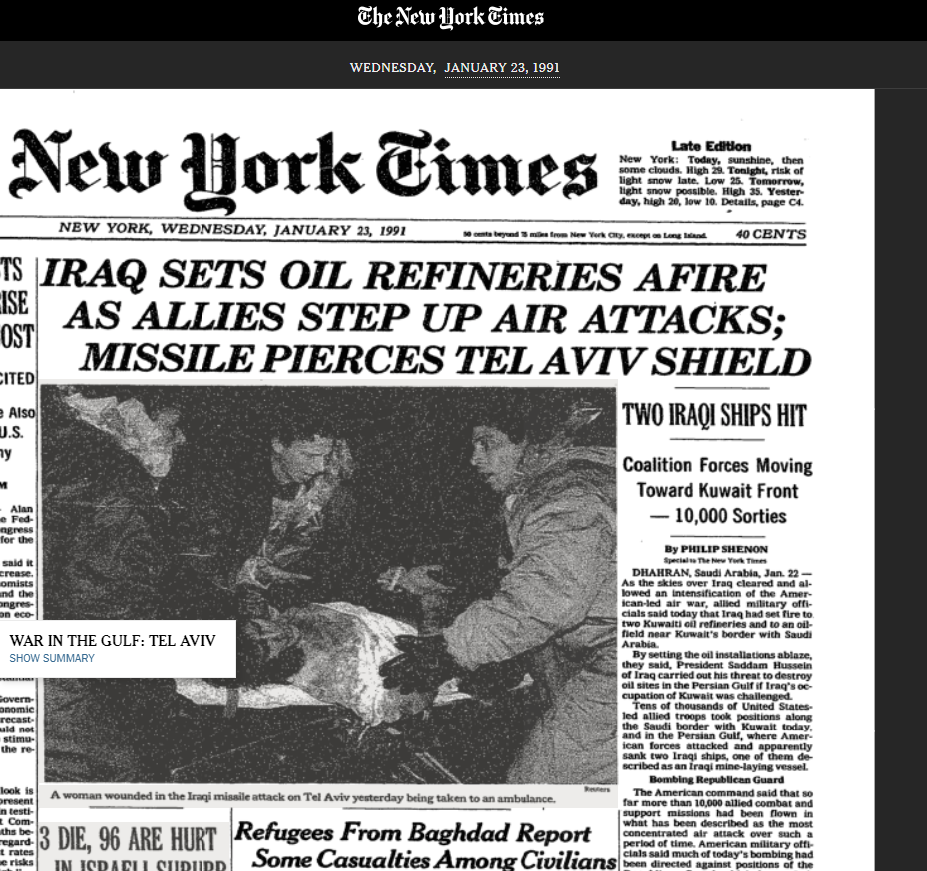
On January 22, 1991, Iraqi forces ignited the first Kuwaiti oil wells during the Gulf War. That date marks the precise beginning of a massive atmospheric smoke event that spread across Kuwait, Saudi Arabia, and neighboring Arab-majority regions for months. The smoke darkened the sky, caused documented environmental and health consequences, and was widely reported and photographed worldwide.
The Quran’s wording refers to a specific day, not a vague era. January 22, 1991 is a documented, identifiable date corresponding to the beginning of the smoke. The affected communities were primarily Arab populations of the Gulf region, a defined people, not all humanity.
Rashad Khalifa publicly declared his messengership in 1988 under the covenant of 3:81 and was killed on January 31, 1990. By the time the smoke began in January 1991, the messenger had indeed come, clarified the message, been rejected, and departed. The chronological sequence aligns with the structure of 44:10–15.
This page presents the Quranic text, extracts its criteria, documents the historical record of 1991, and evaluates the correspondence directly. The conclusion rests not on speculation, but on the alignment between the Quran’s wording and documented history.
Table of Contents
- Introduction
- The Quranic Text (44:10–15)
- Textual Criteria
- Historical Event: 1990–1991
- Correlation With the Quranic Criteria
- The Smoke as an Independent Quranic Sign
- Integration With the Covenant of 3:81
- Destruction of Communities After Messengers
- Addressing Objections
- Upholding the Quran Above All
- Supporting Links
1. Introduction: The Quranic Pattern of Manifestations
The Quran presents itself not merely as a book of doctrine, but as a book accompanied by signs. Throughout its chapters, God describes manifestations that validate revelation, distinguish truth from falsehood, and expose the response of human beings to divine guidance.
Some of these manifestations are explicitly stated within the Quran itself. Among them:
The splitting of the moon (54:1)
The numerical structure described in (74:30–35)
The covenant of a messenger after the prophets (3:81)
The emergence of a creature that speaks to the people (27:82)
Each of these functions within a consistent Quranic pattern: revelation is given, a messenger conveys it, people respond, and signs distinguish sincerity from rejection.
Within this framework appears another manifestation also known as Quran smoke prophecy:
“So watch for the day when the sky brings a visible smoke.” (44:10)
This verse introduces what the Quran calls “the Smoke” – a sign connected directly to human response and to the presence of a messenger (44:13–14). The purpose of this study is to examine whether this manifestation corresponds to a documented historical event, and whether it fits the Quranic pattern of messenger, rejection, and consequence.
The Quran’s Language: Precision Matters
Before exploring history, the Quran’s wording itself must be understood carefully.
- “The sky” (السَّمَاء)
The Arabic word as-samā’ does not exclusively mean outer space. In the Quran, it frequently refers to the sky above – the atmospheric heavens visible from earth. Rain comes from the samā’ (2:22), and clouds are described within it. Therefore, the phrase:
“the sky brings a visible smoke” (44:10)
does not require an extraterrestrial event. It may refer to a phenomenon filling the visible sky – the atmospheric domain under which people live.
- “It will envelop the people” (44:11)
The verse states:
“It will envelop the people; this is a painful retribution.”
The Quran uses distinct expressions when it intends universality (for example, “all the people”). Here, the wording simply says an-nās – “the people.” In Quranic usage, this can refer to a specific community under discussion, not necessarily every human being on earth.
Thus, the verse does not require a global, planet-wide extinction-level event. It requires a smoke that envelops a defined people – the relevant community within the narrative.
- The Quote of 44:12
Verse 44:12 states:
“Our Lord, relieve this retribution for us; we are believers.”
This is a quotation. The Quran is recording what the afflicted people say during the ordeal. The verse does not declare that they truly became believers. It simply reports their plea under distress.
This distinction is important. The Quran frequently records statements made in fear or crisis without endorsing their sincerity. The pattern is familiar: when retribution approaches, people promise belief; once relief comes, they revert (44:15).
Thus, the Smoke narrative includes:
- Suffering
- Imploring
- Temporary relief
- Subsequent return to prior behavior
This is consistent with the Quranic pattern of tested communities.
The Messenger and the Reaction (44:13–14)
Immediately after the plea of 44:12, the Quran says:
“How can they take heed, when a clarifying messenger had already come to them? Then they turned away from him and said, ‘Well educated, but crazy!’” (44:13–14)
Two elements stand out:
- A messenger had already come.
- He was rejected with a specific accusation: educated, yet accused of madness.
The Quran often records the charge of madness against messengers (e.g., 15:6, 68:51). What is striking here is the coupling of clarity and dismissal. The messenger is described as clarifying, yet labeled irrational.
In modern context, this description carries an additional layer of resonance. A trained biochemist with a PhD, objectively well-educated, who publicly presented Quranic research and declared his messengership was indeed accused of being “crazy” by opponents. The Quranic wording, “well educated, but crazy,” captures precisely the form of dismissal often directed at a learned individual whose conclusions are rejected.
Whether one accepts or rejects the identity of that messenger, the Quranic pattern remains:
- A messenger comes.
- He clarifies.
- He is dismissed.
- A manifestation follows.
The Smoke appears within this sequence – not detached from it.
Scope of This Study
This study proceeds on the following basis:
- The Quran’s wording will define the criteria.
- Historical evidence will be examined against those criteria.
- Personality will not override text.
- Speculation will not override documentation.
The goal is not sensationalism, nor apocalyptic rhetoric, but careful examination of whether 44:10–16 corresponds to a verifiable manifestation occurring after the coming and rejection of a messenger.
The Quran describes its signs as reminders. Whether one ultimately accepts or questions, the responsibility remains to examine the verses with precision and without exaggeration.
The next section presents the Quranic text of the Smoke in full, followed by a systematic extraction of the conditions embedded within it.
Before exploring history, the Quran’s wording itself must be understood carefully.
2. The Quranic Text of the Smoke (44:10–15)
2.1 Surah 44:10–15 (Full Text)
The foundation of this study is the Quran itself. Before examining interpretation or history, the verses must be read carefully and sequentially.
44:10 So watch for the day when the sky brings a visible smoke.
44:11 It will envelop the people; this is a painful retribution.
44:12 “Our Lord, relieve this retribution for us; we are believers.”
44:13 How can they take heed, when a clarifying messenger had already come to them?
44:14 But they turned away from him and said, “Well educated, but crazy!”
44:15 We will relieve the retribution for a while; you will surely revert.
2.2 Observing the Sequence of Events
These verses present a deliberate progression:
- A visible smoke appears.
- It envelops “the people.”
- The people experience painful suffering.
- They implore God for relief.
- The Quran reminds that a messenger had already come.
- That messenger was rejected and dismissed.
- Temporary relief is granted.
- The people revert.
The Smoke is therefore not presented in isolation. It is embedded within a messenger–rejection–consequence structure.
The text itself establishes that the manifestation follows the coming of a messenger and the turning away from him.
2.3 The Meaning of “The Sky” (44:10)
The Arabic word used is as-samā’ (السَّمَاء).
In Quranic usage, this word frequently refers to the visible sky or atmospheric heavens above the earth. Rain descends from the samā’ (2:22), and clouds are described within it. The term does not exclusively mean outer space.
Therefore, the statement:
“the sky brings a visible smoke”
does not require a cosmic or extraterrestrial phenomenon. It describes a smoke that becomes visible in the sky over a people — within the atmospheric realm under which they live.
The emphasis in the verse is on visibility.
The smoke must be observable and unmistakable.
2.4 “It Will Envelop the People” (44:11)
The verse states:
“It will envelop the people; this is a painful retribution.”
The wording does not say “all the people” or “all humanity.” When the Quran intends universality, it uses distinct expressions.
Here, an-nās (“the people”) may refer to a defined community under discussion. In many Quranic narratives, “the people” refers to a specific rejecting group – such as the people of Noah, ‘Ad, Thamud, or Pharaoh.
In 1991, the smoke enveloped populations across the Arabian Peninsula, including Kuwait, Saudi Arabia, and neighboring Arab-majority states. The affected communities were culturally and linguistically Arab, distinct from surrounding non-Arab populations. The regional specificity aligns precisely with the Quranic pattern of retribution directed toward a defined people rather than all humanity.
Thus, the text requires:
- A defined people
- A visible smoke
- Painful consequences
It does not require global extinction or destruction of all human life.
2.5 The Imploring in 44:12
Verse 44:12 records the words spoken during the ordeal:
“Our Lord, relieve this retribution for us; we are believers.”
This is a quotation.
The Quran is reporting what they say under distress. It does not declare that they truly became believers.
The following verse clarifies:
“We will relieve the retribution for a while; you will surely revert.” (44:15)
This confirms that their declaration of belief was temporary or insincere. The pattern is consistent with previous communities described in the Quran:
- Affliction arrives.
- People plead.
- Relief is granted.
- Reversion follows.
The Smoke narrative follows this established pattern.
2.6 The Messenger Already Came (44:13–14)
Between the plea and the relief, the Quran inserts a reminder:
“How can they take heed, when a clarifying messenger had already come to them?”
The wording is precise:
- The messenger is described as clarifying.
- His message had already been delivered.
- The Smoke occurs after his coming.
Verse 44:14 continues:
“They turned away from him and said, ‘Well educated, but crazy!’”
This records the accusation made against the messenger.
The Quran frequently records the charge of madness directed at messengers. What is distinctive here is the coupling of clarity and dismissal – the messenger is knowledgeable and articulate, yet labeled irrational.
The sequence established by the verses is therefore:
- A messenger comes.
- He clarifies.
- He is rejected and dismissed.
- A visible manifestation appears.
- The people suffer.
- They plead for relief.
- Relief is granted temporarily.
- They revert.
This is the textual structure that must guide any historical examination.
3. Textual Criteria Derived From 44:10–15
Before comparing the Smoke to any historical event, the Quranic text must define the parameters. The verses themselves establish objective criteria. Any proposed fulfillment must satisfy these conditions.
This section extracts those criteria directly from 44:10–15.
3.1 A Visible Smoke in the Sky (44:10)
“So watch for the day when the sky brings a visible smoke.”
From this verse, several requirements emerge:
- The event is observable.
- The smoke is visible.
- It appears in the sky (atmospheric realm).
- It occurs on a specific “day” or identifiable period.
The text does not describe metaphor, symbolism, or spiritual abstraction. It describes a visible phenomenon. The verse refers to “the day,” not a vague period. On January 22, 1991, the first Kuwaiti oil wells were ignited. That date marks the precise beginning of the visible smoke. The Quran’s wording corresponds to a specific, identifiable day in history.
Any proposed historical correspondence must involve a smoke that:
- Is seen,
- Fills or occupies the sky,
- And is widely recognized.
3.2 It Envelops “The People” (44:11)
“It will envelop the people; this is a painful retribution.”
From this verse:
- The smoke surrounds or covers a defined people.
- It causes real suffering.
- It is described as retribution (‘adhāb).
The Quran does not describe this as a mere inconvenience. It is painful and punitive in nature.
However, the wording does not state “all humanity.” The phrase an-nās allows for a specific community under discussion, consistent with Quranic narrative style.
Thus, the manifestation must:
- Affect a defined population,
- Produce measurable hardship,
- Be severe enough to be described as retribution.
3.3 The People Imploring for Relief (44:12)
“Our Lord, relieve this retribution for us; we are believers.”
This establishes:
- The suffering is intense enough to provoke prayer.
- The people recognize it as retribution.
- They plead collectively for removal.
Importantly, the verse records their statement. It does not confirm the sincerity of their belief.
Therefore, the event must produce:
- Public distress,
- Appeals for relief,
- Recognition of severity.
3.4 A Messenger Had Already Come (44:13)
“How can they take heed, when a clarifying messenger had already come to them?”
This verse anchors the Smoke chronologically.
The manifestation occurs:
- After a messenger has come.
- After the message has been clarified.
- Within a context of rejection.
The Smoke is not random. It follows the coming of a messenger.
Thus, any historical correspondence must satisfy:
- The prior presence of a messenger,
- Public delivery of a clarifying message,
- Documented rejection or dismissal.
3.5 The Messenger Was Dismissed (44:14)
“They turned away from him and said, ‘Well educated, but crazy!’”
This verse specifies the nature of rejection:
- The messenger was rejected.
- He was described as knowledgeable.
- He was accused of irrationality or madness.
This is not generic rejection. It includes ridicule and character dismissal.
Therefore, the criteria include:
- Public accusations against the messenger.
- Framing him as misguided or unstable despite learning.
- Rejection after clarification.
3.6 Temporary Relief Followed by Return to Denial (44:15)
“We will relieve the retribution for a while; you will surely revert.”
This verse establishes two critical conditions:
- The smoke or its effects are removed temporarily.
- The people revert after relief.
The manifestation is not permanent destruction. It is:
- Severe,
- Temporary,
- Followed by reversion.
This pattern is consistent with previous Quranic communities:
- Warning,
- Distress,
- Plea,
- Relief,
- Reversion.
Any historical match must include:
- A defined period of suffering,
- A cessation or dissipation,
- Continuation of prior behavior afterward.
3.7 Summary of Quranic Criteria
From 44:10–15 alone, the following checklist emerges:
- A visible smoke in the sky.
- Enveloping a defined people.
- Causing painful suffering.
- Leading to collective imploring for relief.
- Occurring after a clarifying messenger.
- Following public rejection and ridicule.
- Temporarily relieved.
- Followed by reversion.
These are the textual requirements.
No historical event should be imposed onto the verses. Rather, any proposed correspondence must be evaluated against these conditions.
The next section will examine whether a documented historical event satisfies this Quran-derived framework.
4. Historical Event: 1990–1991
Having established the textual criteria derived from 44:10–15, we now examine a documented historical event that occurred in 1990–1991 in the Middle East.
This section presents the historical record first. The comparison with the Quranic criteria will follow afterward.
4.1 Background: Regional Crisis
On August 2, 1990, Iraq invaded Kuwait. The invasion triggered a major international crisis, leading to the formation of a multinational coalition and the outbreak of the Gulf War.
The conflict intensified through late 1990 and early 1991, culminating in military operations in January 1991.
This regional upheaval set the stage for one of the most dramatic environmental events of the twentieth century.
4.2 Ignition of the Oil Wells (January 1991)
As Iraqi forces retreated from Kuwait in January 1991, they ignited hundreds of Kuwaiti oil wells.
On January 22, 1991, Iraqi forces ignited the first Kuwaiti oil wells, initiating the smoke event described in this study. Ultimately, approximately 600–700 wells were burning simultaneously.
The fires continued for months.
The final well was not extinguished until November 1991.
For nearly ten months, vast quantities of crude oil burned continuously.
4.3 The Visible Smoke
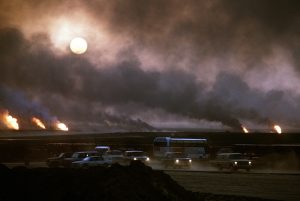
The oil well fires produced enormous plumes of thick black smoke that rose into the sky and spread across the region.
Documented effects included:
- Massive columns of smoke visible for miles.
- Dense black clouds covering large areas of Kuwait and parts of Iraq and neighboring regions.
- Daytime skies darkened by smoke.
- Reduced visibility and hazardous air conditions.
Satellite imagery from the period shows smoke plumes extending across national boundaries.
The smoke did not remain confined to a single well site; it formed an enveloping atmospheric layer over the region.
4.4 Environmental and Human Impact
The consequences were severe:
- Air pollution reached extreme levels.
- Soot and oil residues fell like black rain.
- Respiratory illnesses increased among local populations.
- Workers and civilians experienced prolonged exposure to toxic air.
Contemporary reports described:
- Daytime darkness in affected areas.
- Persistent smoke cover.
- Widespread discomfort and health distress.
The fires were widely reported by international media and documented by environmental agencies.
4.5 Duration and Dissipation
The fires were not momentary.
They burned continuously from January through November 1991.
Over time:
- Firefighting efforts gradually reduced the number of active wells.
- Smoke levels diminished progressively.
- Eventually, the fires were extinguished.
By late 1991, the sky over Kuwait had cleared.
The smoke episode was therefore:
- Severe,
- Prolonged,
- Yet temporary.
It had a definable beginning and a definable end.
4.6 Public Response During the Crisis
During the period of intense smoke and war:
- Religious leaders across the region called for prayer.
- Public appeals for divine relief were made.
- The event was widely described as catastrophic and unprecedented.
The language used in media and religious discourse frequently framed the disaster in moral and theological terms.
The region experienced:
- Fear,
- Uncertainty,
- Appeals to God for relief,
- Calls for repentance.
These responses were recorded in sermons, broadcasts, and publications of the time.
4.7 Historical Summary
The 1990–1991 Gulf War oil fires resulted in:
- A visible, massive smoke filling the sky.
- Envelopment of a defined regional population.
- Documented suffering and health consequences.
- A prolonged but temporary period of atmospheric darkness.
- Eventual dissipation after months of burning.
These facts are historically documented and verifiable through public records, satellite imagery, environmental data, and news archives.
The next section will examine how this historical event compares directly to the Quranic criteria derived from 44:10–15
5. Correlation With the Quranic Criteria (44:10–15)
Section 3 established the textual requirements derived strictly from 44:10–15.
Section 4 presented the documented historical record of January–November 1991.
This section evaluates whether the historical event satisfies the Quranic criteria.
The comparison is structured point by point.
5.1 A Visible Smoke in the Sky (44:10)
“So watch for the day when the sky brings a visible smoke.”
The Quran’s reference to “the day” corresponds directly to January 22, 1991, the documented date when the smoke first rose into the sky. By January 23, international media, including the New York Times, reported massive smoke plumes rising into the sky.
Satellite imagery and on-the-ground documentation confirm:
- Thick black smoke visibly filling the sky.
- Dense atmospheric coverage across Kuwait and parts of the surrounding region.
- Daytime darkness in affected areas.
The smoke was not symbolic.
It was visible, measurable, and documented.
The criterion of a visible smoke in the sky is satisfied.
5.2 Enveloping “The People” (44:11)
“It will envelop the people; this is a painful retribution.”
The smoke did not remain confined to isolated well sites. It formed a dense atmospheric layer over populated areas.
Effects included:
- Reduced visibility.
- Persistent air contamination.
- Widespread exposure to soot and toxic particulates.
- Health consequences among civilians and workers.
The phrase “the people” does not require universality. It requires a defined community under impact.
The primary populations affected were Arab communities of the Gulf region. Saudi Arabia, a central religious authority in the Muslim world and a major opponent of Rashad Khalifa’s Quran-alone call, lay within the affected atmospheric zone. The manifestation occurred in the very region where rejection had been most pronounced.
The criterion of envelopment of a defined people is satisfied.
5.3 Painful Suffering and Distress (44:11–12)
“This is a painful retribution.”
“Our Lord, relieve this retribution for us…”
The environmental impact of the oil fires included:
- Respiratory distress.
- Toxic air conditions.
- Prolonged exposure to hazardous smoke.
- Psychological fear during wartime.
Religious leaders across the region publicly called for prayer. Appeals for divine relief were made during the height of the crisis.
While the Quran records the plea without confirming sincerity, the historical record confirms:
- Public distress,
- Religious appeals,
- Recognition of the severity of the event.
The criterion of painful suffering leading to imploring is satisfied.
5.4 Occurring After a Messenger (44:13)
“How can they take heed, when a clarifying messenger had already come to them?”
Rashad Khalifa publicly declared his messengership in 1988, invoking the covenant of 3:81. His work centered on:
- Upholding the Quran alone.
- Calling for worship of God alone.
- Rejecting sectarian additions.
His declaration was widely circulated and widely rejected.
The phrase “had already come” (44:13) denotes a completed mission prior to the manifestation. Rashad Khalifa declared his messengership publicly in 1988 and was killed on January 31, 1990. By January 22, 1991, when the smoke began, the messenger had indeed come, delivered the clarification, been rejected, and departed from this world. The chronological sequence matches the Quranic structure exactly.
The chronological requirement — messenger first, manifestation after — is satisfied.
5.5 Rejection and Ridicule (44:14)
“They turned away from him and said, ‘Well educated, but crazy!’”
Rashad Khalifa was a trained biochemist with a PhD. His academic credentials were publicly known.
In the late 1970s and early 1980s, his discovery of the mathematical structure of 19 within the Quran attracted significant attention across the Muslim world. His work was translated, discussed, and circulated widely.
However, opposition intensified when he publicly called for Muslims to discard hadith and Sunnah as religious authorities and to uphold the Quran alone as the sole source of law and guidance.
At that point, his acceptance shifted dramatically. Many who had previously shown interest in his research began to reject his conclusions. He was increasingly labeled misguided, delusional, or irrational.
The wording of 44:14 aligns with this pattern:
- Educated,
- Publicly known,
- Yet accused of madness,
- Turned away from after clarification.
The verse does not merely describe rejection; it describes dismissal of a learned individual as irrational.
This element of the text is therefore consistent with the documented historical reaction.
5.6 Temporary Relief and Return to Denial (44:15)
“We will relieve the retribution for a while; you will surely revert.”
The oil well fires:
- Began January 22, 1991.
- Continued for months.
- Gradually diminished.
- Were extinguished by November 1991.
The smoke was severe but temporary.
After the fires were extinguished:
- Regional political dynamics largely reverted.
- Broader theological positions remained unchanged.
- Rejection of the messenger continued.
The pattern of temporary affliction followed by reversion is satisfied.
5.7 Structured Comparison Summary
Based strictly on the criteria derived from 44:10–15:
| Quranic Criterion | Historical Correspondence |
|---|---|
| Visible smoke in the sky | Documented oil well fires (Jan 22, 1991 onward) |
| Enveloping a defined people | Regional atmospheric coverage |
| Painful suffering | Health and environmental impact |
| Imploring and prayer | Public religious appeals during crisis |
| Messenger had come | Declaration in 1988 |
| Rejection and ridicule | Public dismissal of messenger |
| Temporary relief | Fires extinguished by Nov 1991 |
| Reversion | Continued rejection afterward |
The correspondence is structured and sequential.
The historical event is not imposed upon the text; it aligns with the criteria established by the text.
Video Presentation: The Smoke and January 22, 1991
The following brief presentation summarizes the severity of the smoke which started on January 22, 1991.
6. The Smoke as an Independent Quranic Sign
A central question must be addressed: Does the Smoke of 44:10–15 stand as a Quranic manifestation independently, or only within the framework of accepting a particular messenger? This section examines the matter strictly from the text of the Quran.
6.1 The Smoke Is Stated as a Sign Before It Is Linked to a Messenger
The sequence in 44:10–15 begins with the command: “So watch for the day when the sky brings a visible smoke.” (44:10) The instruction to “watch” precedes the mention of the messenger in 44:13. The manifestation is introduced first. The reminder about the messenger comes afterward. This order is important. The Smoke is described as an observable event. Its existence does not depend on whether a person accepts or rejects the messenger. It is a visible phenomenon affecting a defined people. Therefore, the Smoke can be examined historically without first resolving the identity of the messenger.
6.2 The Criteria Are Textual, Not Personality-Based
Section 3 extracted objective criteria directly from the Quran:
- Visible smoke in the sky
- Enveloping a defined people
- Causing painful suffering
- Leading to imploring
- Temporary relief
- Reversion
None of these criteria require acceptance of a particular personality. They are textual conditions. If a historical event satisfies these conditions, then the correspondence can be examined independently of messenger identification. The messenger component (44:13–14) strengthens the pattern — but the smoke itself remains an observable manifestation.
6.3 The Quranic Pattern of Signs and Response
Throughout the Quran, signs are presented as objective events that divide human response. For example:
- The splitting of the moon (54:1–2) was witnessed, yet described as magic by some.
- The signs given to Moses were visible, yet rejected by Pharaoh.
- The creature in 27:82 is described as emerging and speaking to the people.
In each case:
- The sign is external and observable.
- Acceptance or rejection depends on disposition.
The same structure appears in 44:10–15. The Smoke is visible. The suffering is real. The plea is recorded. The reversion is foretold. The text does not condition the existence of the sign upon universal acceptance.
6.4 Distinguishing Between Evidence and Interpretation
It is important to distinguish two levels:
- The historical event itself.
- The interpretation of that event.
The 1991 oil well fires are historically documented. The atmospheric smoke is visually confirmed. The regional suffering is recorded. Whether one interprets that event as fulfillment of 44:10–15 is a matter of evaluation. But the event itself stands independently. The Quran invites observation: “So watch…” The verse does not say “believe without seeing.” It directs attention to an observable occurrence.
6.5 Messenger Integration Without Circularity
The Smoke becomes integrated with the messenger in 44:13–14. However, the existence of the Smoke does not logically depend on first proving the messenger. Instead, the structure allows for two layers:
- Layer 1: Historical correspondence with 44:10–15.
- Layer 2: Integration into the messenger–rejection–manifestation pattern.
If someone questions the identity of the messenger, the discussion can remain at Layer 1. If someone accepts the messenger framework, the integration becomes clearer and more cohesive. Thus, the argument is not circular. The Smoke may be examined:
- Textually,
- Historically,
- Sequentially.
6.6 A Sign That Divides Response
The Quran describes its signs as functioning differently depending on the observer. Some see warning. Some see coincidence. Some see fulfillment. Some see nothing beyond circumstance. The Smoke, if aligned with 44:10–15, fits this pattern. It does not compel belief. It invites examination. It is visible. It is documented. Its interpretation remains open to evaluation.
7. Integration With the Covenant of 3:81
The Smoke of 44:10–15 stands as a Quranic manifestation on its own textual and historical basis. However, the Quran also presents a broader covenant concerning messengers, a covenant that provides additional context for understanding the sequence described in Surah 44.
7.1 The Covenant of 3:81
Verse 3:81 states:
“God took a covenant from the prophets: ‘I will give you the scripture and wisdom. Afterwards, a messenger will come to confirm what you have; you shall believe in him and support him.’”
This verse establishes:
A covenant made with the prophets.
A messenger to come after them.
Confirmation of prior revelation.
A requirement of belief and support.
The verse does not describe a prophet.
It describes a messenger who confirms existing scripture.
The covenant therefore anticipates a later figure whose function is validation, clarification, and confirmation, not the delivery of new scripture.
7.2 Pattern in the Quran: Messenger – Rejection – Consequence
Throughout the Quran, a recurring structure appears:
- A messenger comes to a people.
- He clarifies the message.
- He is rejected or ridiculed.
- A manifestation or retribution follows.
This pattern is seen with:
- Noah and the flood.
- Hud and the wind.
- Salih and the cry and quake.
- Shu‘aib and the quake.
- Moses and the plagues.
The Quran repeatedly links rejection of a messenger to visible consequence.
Surah 44 follows the same structure:
- A clarifying messenger had already come (44:13).
- He was dismissed as irrational (44:14).
- A visible smoke appeared (44:10–11).
- The people suffered and pleaded (44:12).
- Relief was temporary, followed by reversion by a return to denial (44:15).
The structural similarity is not incidental.
7.3 Confirmation Rather Than Innovation
The messenger described in 3:81 is one who confirms what is already present.
Rashad Khalifa’s central claim was not new scripture. His emphasis was:
- Worship God alone.
- Uphold the Quran alone.
- Discard hadith and sectarian additions.
- Recognize the Quran’s internal structure (including 74:30).
His message did not introduce a new book.
It called for returning to the existing one.
This aligns with the description in 3:81 of a messenger who confirms prior revelation.
7.4 Sequence and Timing
The declaration of messengership occurred in 1988. The martyrdom of the messenger further fulfills the expression “had already come.” The smoke occurred after his mission was completed and after rejection had been firmly established.
The regional crisis culminating in the ignition of oil wells began on January 22, 1991.
The order is:
- Messenger publicly clarifies.
- Widespread rejection follows.
- A visible manifestation appears afterward.
This sequencing mirrors the Quranic pattern.
The Smoke is not presented as random geopolitical consequence, but as occurring within a covenant framework described in the Quran itself.
7.5 The Function of Manifestations
In the Quran, manifestations serve multiple functions:
- Warning.
- Distinction between belief and rejection.
- Validation of the message.
- Exposure of human response.
The Smoke, when viewed alongside 3:81 and 44:10–15, fits this model:
- A confirming messenger appears.
- He is rejected.
- A visible atmospheric event follows.
- The affected population experiences distress.
- Relief is temporary.
- Reversion occurs.
The pattern is internally consistent.
7.6 A Covenant-Based Framework
If 3:81 anticipates a messenger after the prophets,
and if 44:10–15 describes a manifestation following rejection of a messenger,
then the two passages form a coherent framework:
- Covenant of confirmation (3:81).
- Messenger comes.
- Clarification delivered.
- Rejection and ridicule.
- Manifestation in the sky.
- Temporary relief.
- Reversion.
The Smoke thus functions not as an isolated environmental event,
but as part of a covenant-based sequence described in the Quran.
Transition to the Next Section
The Quran repeatedly connects the rejection of messengers with consequences for specific communities.
The next section will survey those Quranic precedents and examine how the Smoke aligns with that established pattern.
8. Destruction of Communities After Messengers in the Quran
The Quran repeatedly presents a consistent pattern in the history of messengers and their communities. Understanding this pattern is essential for properly situating the Smoke within the broader Quranic narrative.
The Quran does not treat manifestations as isolated incidents. They occur within a moral and covenantal framework.
8.1 The Recurring Pattern
Across multiple narratives, the sequence is consistent:
- A messenger is sent to a people.
- The message is clarified.
- The people reject or ridicule the messenger.
- A warning sign or manifestation appears.
- Consequence or retribution follows.
This structure appears throughout the Quran.
8.2 Examples From the Quran
The People of Noah
- Noah warned his people persistently.
- They mocked and dismissed him.
- A visible manifestation — the flood — followed.
The flood was not random. It followed prolonged rejection.
The People of ‘Ad
- Hud delivered the message.
- They responded with arrogance.
- A powerful wind struck them.
Again, rejection preceded consequence.
The People of Thamud
- Salih brought the sign of the she-camel.
- They rejected and killed it.
- A devastating cry – a mighty blast – overtook them.
The sign was clear. The rejection was deliberate. The consequence followed.
The People of Shu‘aib
- They were warned regarding corruption and injustice.
- They denied him.
- A quake seized them.
Pharaoh and His People
- Moses presented clear signs.
- Pharaoh dismissed him and accused him of madness.
- Plagues struck Egypt before the final drowning.
Notably, in Pharaoh’s case, manifestations occurred in stages:
- Signs appeared.
- Temporary relief was granted.
- Reversion followed.
- Final consequence came later.
This staged pattern closely resembles the structure described in 44:10–15.
8.3 Warning Before Finality
It is important to note that the Quran does not always present immediate annihilation.
In several cases:
- Signs came first.
- People pleaded.
- Relief was granted temporarily.
- Reversion followed.
- A greater consequence came afterward.
Surah 44 mirrors this structure:
- Visible manifestation (Smoke).
- Painful distress.
- Plea for relief.
- Temporary lifting.
- Reversion.
The text does not state that the Smoke itself is total destruction. It functions within a sequence.
8.4 Defined Communities, Not Universal Events
In the Quran, retribution is directed toward specific communities who received and rejected a messenger.
The destruction of ‘Ad did not destroy all humanity.
The flood of Noah did not eliminate every civilization globally.
The plagues of Egypt targeted Pharaoh’s domain.
The pattern is regional and covenantal — not necessarily universal.
This is consistent with the wording in 44:11:
“It will envelop the people.”
The phrase refers to a defined community, not necessarily the entire world.
8.5 The Structural Alignment
When 44:10–15 is placed alongside the Quranic precedent, the structural parallels are clear:
- Messenger clarifies.
- Messenger is ridiculed.
- Manifestation appears.
- People suffer.
- They plead.
- Relief is temporary.
- Reversion follows.
This pattern is not unique to Surah 44.
It is embedded in the Quran’s historical narratives.
The Smoke therefore fits within an established Quranic template rather than standing as an anomaly.
8.6 Distinguishing Manifestation From Final Judgment
The Quran distinguishes between:
- Temporal consequences within history.
- The final Day of Judgment.
The events involving Noah, ‘Ad, Thamud, and Pharaoh occurred within history. They were not the Last Day.
Similarly, 44:10–15 describes a historical manifestation within time — not the final reckoning of all humanity.
This distinction preserves textual clarity and prevents conflation with eschatology.
Transition to the Next Section
Having examined the pattern of messenger and consequence throughout the Quran, the next section will address objections, both from general readers and from within the Submitter community, and evaluate them in light of the text.
9. Addressing Objections
Any serious Quranic claim must be examined carefully. The purpose of this section is not to dismiss objections, but to evaluate them in light of the text of 44:10–15 and the documented historical record.
Objections fall into two general categories:- Interpretations from the broader Muslim tradition
- Objections from within the Submitter community
Each will be addressed in turn.
9.1 Objection: The Smoke Already Occurred in the Time of Quraysh
Some classical interpretations claim that the Smoke refers to a famine or hardship that occurred during the time of Prophet Muhammad. This interpretation faces several textual challenges:- The verse describes a visible smoke in the sky.
- It is said to envelop “the people.”
- It is linked to a messenger being dismissed as “well educated, but crazy.”
- It includes temporary relief followed by reversion.
Historical famine descriptions during the Meccan period do not document an atmospheric smoke event filling the sky over the region. Additionally, Surah 44 is structured as a warning narrative, not a retrospective commentary on an already completed minor famine episode. The Quranic wording suggests a visible atmospheric phenomenon — not metaphorical hunger or hallucination.
9.2 Objection: The Smoke Is a Future Apocalyptic Event
Another common view is that the Smoke is a sign of the final Hour. However:- 44:10–15 describes a sequence occurring after a messenger has come and been rejected.
- It includes temporary relief.
- It includes reversion.
- It does not describe final annihilation.
The verses do not explicitly link the Smoke to the Last Day. They describe a historical pattern consistent with prior communities, not the universal final judgment. Therefore, while eschatological interpretations exist, the text itself supports a temporal, historical manifestation.
9.3 Objection: “The People” Must Mean All Humanity
Some argue that “the people” must mean every human being on earth. The Quran, however, frequently uses “the people” to refer to defined communities:- The people of Noah
- The people of ‘Ad
- The people of Thamud
- The people of Pharaoh
In each case, “the people” refers to a specific group addressed by a messenger. 44:11 does not use universal phrasing such as “all mankind.” The wording is consistent with regional application.
9.4 Objection: The Smoke Must Eliminate All Life
The text of 44:10–15 does not state total annihilation. It states:- Painful retribution.
- Plea for relief.
- Temporary removal.
- Reversion.
The structure resembles staged warning, not extinction. Historical Quranic precedents (e.g., plagues of Egypt) also involved stages before final consequences. Thus, requiring total global destruction imposes a condition not present in the verses.
9.5 Objection: The Messenger’s Speculation About an Asteroid
In a March 1990 newsletter, Rashad Khalifa expressed the opinion that an asteroid might cause the Smoke. It is important to distinguish between:- Quranic revelation
- Personal speculation
9.6 Objection: Elevating Personality Above Text
Within the Submitter community, some objections arise from the belief that any deviation from earlier expectations undermines loyalty to the messenger. However, Rashad Khalifa’s central message was:- Worship God alone.
- Uphold the Quran alone.
- Reject human authority over divine revelation.
If the Quranic text and historical evidence align in a manner different from earlier speculation, the Quran remains the authority. The issue is not personality. The issue is text.
9.7 Objection: The Event Was Merely Political and Environmental
Some may argue that the 1991 oil fires were simply a geopolitical and environmental disaster. From a purely historical perspective, that is correct. However, the Quran often describes manifestations occurring through natural means:- Wind.
- Flood.
- Earthquake.
- Plagues.
Natural causation does not negate divine significance in Quranic narrative. The relevant question is not whether the oil fires had political causes. The relevant question is whether the event matches the Quranic criteria.
9.8 Summary of Objections
When evaluated against the text of 44:10–15:- The famine interpretation lacks atmospheric smoke evidence.
- The apocalyptic interpretation stretches beyond the stated sequence.
- Universal application is not required by the wording.
- Total annihilation is not stated.
- Personal speculation does not override textual criteria.
- Natural mechanisms do not negate Quranic framing.
The Smoke must be evaluated by the verses themselves.
Transition to Final Sections
Having examined objections, the final sections will summarize the findings and restate the Quranic framework within which the Smoke is understood.
10. A Necessary Reminder: Upholding the Quran Above All
The purpose of this study is not to elevate a personality, nor to defend a community position. It is to examine whether the Quran’s own words correspond to a documented historical event.
Throughout his work, Rashad Khalifa repeatedly emphasized a single principle:
- Worship God alone.
- Uphold the Quran alone.
- Do not place human statements above divine revelation.
He frequently stated:
“Do not go by what I say; go by the Quran.”
That principle must remain central.
10.1 Distinguishing Between Revelation and Human Interpretation
The Quran is revelation.
Human interpretation, including that of any messenger, is not revelation.
If a messenger speculates about how a prophecy might unfold, that speculation does not carry the authority of scripture.
The Quran itself must define the criteria.
If historical evidence aligns with the text, even if the mechanism differs from earlier expectations, the text remains the authority.
The Quran does not describe the cause of the Smoke.
It describes its appearance, sequence, and context.
The responsibility is to measure events against the verses, not verses against human expectation.
10.2 The Danger of Personality-Based Religion
The Quran repeatedly warns against elevating individuals beyond their proper role.
Messengers clarify.
They deliver.
They warn.
But they do not replace scripture.
In past communities, attachment to personality often replaced attachment to revelation.
The same danger exists in every generation.
If loyalty to a messenger leads to defending speculation over text, the central Quranic principle is lost.
10.3 The Central Principle: God Alone, Quran Alone
The claim of messengership in 3:81 was not a claim of new scripture. It was a call to return to the existing one.
The core message was:
- Remove additions.
- Reject hadith as religious authority.
- Restore the Quran as complete and sufficient.
The Smoke discussion must remain within that framework.
If the Quran describes a manifestation, and history aligns with it, the conclusion should arise from the text itself.
If it does not align, the text remains authoritative.
The standard does not change.
10.4 Signs Do Not Compel Belief
The Quran teaches that signs do not compel belief. They distinguish between responses.
Some see signs and reflect.
Some see signs and dismiss.
Some reinterpret.
Some ignore.
The Smoke, if aligned with 44:10–15, functions in the same way.
It does not force conviction.
It invites examination.
10.5 The Responsibility of the Reader
The Quran repeatedly calls upon its readers to:
- Observe.
- Reflect.
- Think.
- Examine.
This study presents:
- The text.
- The criteria.
- The historical record.
- The structured comparison.
The conclusion rests with the reader.
The guiding principle remains unchanged:
The Quran stands above all human authority.
Closing Transition
The Smoke also called Quran smoke prophecy, as described in 44:10–15, fits within a broader Quranic pattern of messenger, rejection, manifestation, and reversion.
Whether one ultimately accepts this correspondence or not, the responsibility remains to approach the Quran with precision, sincerity, and independence from personality.
Frequently Asked Questions
What is the Smoke mentioned in Surah 44 (Dukhan)?
Surah 44:10–15 describes a visible smoke that appears “on the day” the sky brings it forth. The smoke envelops a defined people, causes painful suffering, and occurs after a messenger had already come and been rejected. The passage presents the event within a historical sequence, not as abstract symbolism. The wording is concrete and observational.
Is the Smoke in Surah 44 a future apocalyptic event?
While some interpretations place the Smoke in the distant future, the verses describe temporary relief followed by reversion, a pattern consistent with historical manifestations in the Quran. The structure of 44:10–15 aligns with prior episodes of messenger, rejection, and consequence rather than the final universal judgment.
What does “Dukhan” mean?
“Dukhan” is the Arabic word for smoke. Surah 44 is named Surah Ad-Dukhan (“The Smoke”) because of the visible atmospheric event described in verses 10–15. The passage does not describe metaphorical hardship; it refers to a visible phenomenon in the sky.
What is meant by the “Quran smoke prophecy”?
The term “Quran smoke prophecy” refers to the description in Surah 44:10–15 of a visible smoke affecting a defined people after the coming of a messenger. The verses establish identifiable criteria – a specific day, a visible atmospheric event, suffering, imploring, temporary relief, and reversion. These criteria allow the event to be examined historically rather than interpreted symbolically.
Does the Quran specify which people are affected?
The verse states that the smoke will envelop “the people.” In Quranic usage, similar phrasing refers to a defined community rather than all humanity. The wording does not indicate a global extinction event, but a regional manifestation directed toward a specific people within history.