Introduction
For more than a century, large segments of the Muslim world have been consumed by the idea of establishing:
- an “Islamic State,”
- a caliphate,
- political Sharia,
- or religious government.
From the Muslim Brotherhood to modern Islamist movements, many have argued that Islam requires:
- state enforcement of religion,
- juristic control of society,
- and political implementation of “Islamic law.”
Yet a striking question is rarely asked:
Does the Quran itself ever command the establishment of an Islamic State?
The answer is profoundly important because the Quran repeatedly presents religion as:
- submission to God,
- moral accountability,
- freedom of belief,
- righteousness,
- and direct worship of the Creator.
It does not present religion as:
- ideological empire,
- juristic theocracy,
- or clerical state power.
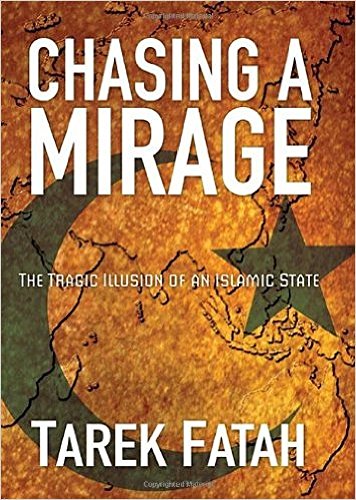
Writers such as Tarek Fatah correctly recognized that much of modern Islamism has little to do with the Quran itself. He argued that most Muslims would prefer to live in:
a state of submission to God,
rather than:
an Islamic State.
This distinction is critically important.
The Quran repeatedly calls individuals toward:
Islam
(submission to God),
not toward the construction of:
Islamism
(political religious ideology).
The tragedy of the modern Muslim world is that generations were taught to pursue a political mirage that the Quran itself never commanded.
Islam Is Submission to God — Not a Political System
The Quran uses the word:
Islam
in its original meaning:
submission to God.
It is not primarily presented as:
- a political ideology,
- state system,
- empire,
- or institutional religion.
The Quran repeatedly speaks about:
- individuals submitting to God,
- hearts becoming content through submission,
- and human beings freely choosing belief.
“O you who believe, you shall embrace total submission (Islam)…” (2:208)
“If GOD renders one’s heart content with Submission (Islam), he will be following a light from his Lord.” (39:22)
The Quran also describes:
- Abraham,
- Jacob,
- and earlier believers
as:
submitters (Muslims).
“Do not die except as submitters.” (2:132)
“To Him alone we are submitters.” (2:133)
The word:
Muslim
therefore describes:
- a relationship with God,
not: - membership in a political state.
Similarly:
“We make no distinction among any of them. To Him alone we are submitters.” (3:84)
The Quran consistently emphasizes:
- faith,
- worship,
- righteousness,
- and submission to God alone.
It nowhere commands the construction of:
- a religious empire,
- a juristic state,
- or a global theocracy.
Freedom Is Central to the Quran
One of the Quran’s clearest and most repeated principles is:
freedom of belief.
“There shall be no compulsion in religion.” (2:256)
“The truth is from your Lord; whoever wills may believe, and whoever wills may disbelieve.” (18:29)
“Had your Lord willed, all the people on earth would have believed. Are you going to force the people to become believers?” (10:99)
The Quran repeatedly presents faith as:
- voluntary,
- moral,
- and rooted in conscience.
Even the Prophet himself is repeatedly instructed that his role is:
- delivery of the message,
not: - coercive enforcement.
“You have no power over them.” (88:22)
This framework stands in direct tension with:
- coercive religious states,
- forced orthodoxy,
- and ideological Islamism.
The Quran consistently preserves:
individual moral responsibility before God.
The Quran Never Establishes a Theocracy
One of the most remarkable facts about the Quran is what it does NOT contain.
The Quran contains:
- moral guidance,
- spiritual principles,
- laws concerning justice and social conduct,
- and instructions for believers.
But it nowhere establishes:
- a constitutional blueprint,
- a clergy,
- an institutional priesthood,
- a juristic state,
- or a formal “Islamic government.”
There is:
- no Quranic constitution,
- no mandatory caliphate structure,
- no priestly hierarchy,
- and no command to create a global Islamic empire.
This absence is profoundly significant.
If establishing an Islamic State were central to religion itself, one would expect the Quran to state so explicitly.
Instead, the Quran repeatedly emphasizes:
- righteousness,
- justice,
- charity,
- worship,
- humility,
- and accountability before God.
How the Islamic State Idea Emerged
The concept of the Islamic State developed gradually through:
- empire,
- dynastic expansion,
- juristic systems,
- and political power.
After Prophet Muhammad’s death, political struggles rapidly emerged:
- succession disputes,
- civil wars,
- dynastic conflicts,
- and imperial expansion.
Over time:
- empires,
- rulers,
- jurists,
- and scholars
constructed increasingly elaborate religious-political systems.
Historical Sharia developed:
- generations after the Quran,
- through legal schools,
- juristic reasoning,
- Hadith collections,
- and imperial administration.
Movements such as:
- Wahhabism,
- the Muslim Brotherhood,
- political Salafism,
- and later Islamist ideologies
further transformed religion into: - political activism,
- ideological governance,
- and state-centered religious identity.
Thinkers such as Sayyid Qutb and Abul A’la Maududi helped systematize the idea that Islam itself requires:
- political domination,
- ideological governance,
- and Islamic state structures.
Yet these concepts emerge far more clearly from:
- post-Quranic political history
than from the Quran itself.
The Quran and Religious Law
The Quran repeatedly insists that:
God alone is the source of religious legislation.
“Shall I seek other than GOD as a source of law, when He has revealed to you this book fully detailed?” (6:114)
“The Word of your Lord is complete, in truth and justice.” (6:115)
“Legislation belongs to GOD alone.” (12:40)
The Quran repeatedly describes itself as:
- complete,
- fully detailed,
- and sufficient.
It even explicitly identifies itself as:
Hadith.
“GOD has revealed herein the best Hadith…” (39:23)
And asks repeatedly:
“Which Hadith other than GOD and His revelations do they believe in?” (45:6)
“Which Hadith, other than this, do they uphold?” (77:50)
The implication is clear.
The Quran consistently redirects believers toward:
revelation itself,
not toward:
- later juristic systems,
- inherited political ideology,
- or clerical religious authority.
Islam vs Islamism
A critically important distinction must therefore be made between:
Islam
and:
Islamism.
Islam, according to the Quran, is:
- submission to God,
- worship,
- righteousness,
- humility,
- charity,
- and moral accountability.
Islamism transforms religion into:
- political ideology,
- state power,
- legal domination,
- and institutional authority.
The Quran consistently addresses:
- the human soul,
- conscience,
- sincerity,
- and moral choice.
Islamism primarily seeks:
- political control,
- ideological conformity,
- and religious governance.
The two are not the same.
Why Islamic States Repeatedly Fail
Throughout modern history, self-described Islamic states have repeatedly descended into:
- authoritarianism,
- sectarianism,
- coercion,
- corruption,
- and political violence.
Examples frequently cited include:
- Iran,
- Taliban Afghanistan,
- ISIS,
- Saudi religious authoritarianism,
- and other Islamist systems.
This failure is not accidental.
When religion becomes:
- state ideology,
- institutional coercion,
- or clerical authority,
the Quran’s central principles become distorted.
The Quran repeatedly grounds religion in:
- freedom,
- conscience,
- sincerity,
- and personal accountability before God.
Coercive religious systems inevitably undermine these principles.
The Flourishing of Freedom
Historically, some of the most intellectually vibrant Muslim civilizations flourished during periods of:
- relative openness,
- pluralism,
- commerce,
- and intellectual freedom.
Centers such as:
- Damascus,
- Cordoba,
- and Baghdad
became major civilizations not primarily because of religious coercion, but because of: - knowledge,
- trade,
- openness,
- and relative intellectual freedom.
The Quran itself repeatedly encourages:
- reflection,
- learning,
- thought,
- and voluntary belief.
Freedom is not alien to the Quran.
It is deeply embedded within it.
The Quran’s Alternative
The Quran offers a profoundly different model from political Islam.
Its focus is:
- the individual soul,
- direct worship of God,
- moral accountability,
- justice,
- compassion,
- charity,
- and righteousness.
The Quran repeatedly rejects:
- compulsion,
- religious intermediaries,
- and human religious authority beside God.
It calls human beings toward:
submission to God,
not:
submission to religious states.
The path out of the misery afflicting much of the Muslim world is not:
- harsher ideology,
- stricter clericalism,
- or political theocracy.
Rather, it is:
returning directly to the Quran itself.
Conclusion
The Quran never commands the establishment of:
- an Islamic State,
- clerical rule,
- juristic empire,
- or ideological theocracy.
It consistently calls human beings toward:
- submission to God,
- freedom of conscience,
- moral accountability,
- and direct worship of the Creator.
The idea of the Islamic State emerged historically through:
- empire,
- politics,
- jurisprudence,
- dynastic power,
- and ideological movements,
not directly from the Quran itself.
The tragedy is that generations of Muslims were taught to pursue:
political domination,
instead of:
submission to God alone.
The Quran repeatedly presents revelation as:
- complete,
- fully detailed,
- and sufficient.
The solution therefore is not:
- secular hatred of religion,
nor: - coercive political Islam.
The solution is returning directly to:
God’s words alone.
Continue Your Study
ISLAMIC STATE
THEMES
QURAN