Introduction
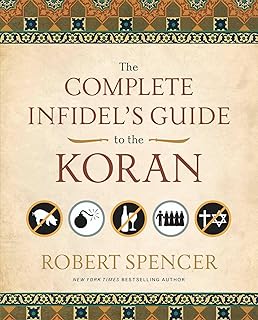
The Quran hijacked twice. For decades, anti-Islam writers such as Robert Spencer have argued that the Quran promotes:
- violence,
- intolerance,
- religious supremacy,
- oppression of women,
- and political domination.
At the same time, many traditional Muslim scholars insist that Islam requires:
- Hadith literature,
- medieval jurisprudence,
- political Sharia systems,
- clerical authority,
- and religious legislation developed centuries after the Quran.
At first glance, these two camps appear to stand in complete opposition to one another.
Yet remarkably, both sides often rely upon the same foundation:
post-Quranic religious tradition.
The anti-Islam polemicist uses:
- Hadith,
- medieval legal rulings,
- extremist interpretations,
- and later Islamic history
to define Islam.
Traditional orthodoxy often does the same.
Both frequently treat:
- Hadith literature,
- juristic systems,
- and inherited religious tradition
as the real authority,
while the Quran itself becomes secondary.
The result is that the Quran has effectively been:
hijacked twice.
Once by critics seeking to portray Islam through the harshest interpretations of post-Quranic tradition.
And again by traditionalists who elevated human religious authority beside the Quran itself.
The central question therefore becomes:
What actually represents Islam according to the Quran?
The Quran’s Own Claim About Itself
The Quran repeatedly describes itself as:
- complete,
- fully detailed,
- sufficient,
- and the sole source of religious law.
“Shall I seek other than GOD as a source of law, when He has revealed to you this book fully detailed?” (6:114)
“The Word of your Lord is complete, in truth and justice. Nothing shall abrogate His words.” (6:115)
“This Quran could not possibly be authored by other than GOD. It confirms previous scriptures and provides a fully detailed scripture.” (10:37)
The Quran repeatedly insists that revelation itself is:
- sufficient,
- clear,
- and complete.
Yet both anti-Islam polemicists and traditional Muslim orthodoxy frequently move beyond the Quran almost immediately.
The Strange Alliance Between Critics and Traditionalists
This creates one of the strangest dynamics in modern religious discourse.
Writers such as Robert Spencer often present themselves as critics of Islam.
However, in practice, they frequently accept the authority structure of traditional Islam almost entirely.
The only difference is:
- traditionalists defend the inherited tradition,
while - critics condemn it.
But both sides often assume:
- Hadith,
- medieval jurisprudence,
- juristic rulings,
- and later religious systems
accurately represent the Quran itself.
Thus, both camps frequently marginalize the Quran’s own repeated claims:
- completeness,
- sufficiency,
- and direct accessibility.
This is why many anti-Islam critiques ultimately become critiques not primarily of the Quran itself, but of:
- later religious history,
- political empires,
- sectarian jurisprudence,
- and post-Quranic religious tradition.
Can Islam Be Judged by Hadith Literature?
One of the central problems in both traditional Islam and anti-Islam polemics is the enormous authority granted to Hadith literature.
The major Hadith collections were compiled:
- more than two centuries after the Quranic revelation,
- after political fragmentation,
- civil wars,
- sectarian conflict,
- and imperial expansion.
These collections contain:
- contradictions,
- political narratives,
- legal disputes,
- sectarian agendas,
- and theological developments
reflecting centuries of historical evolution.
Yet both traditionalists and critics frequently treat these later narrations as though they were identical with the Quran itself.
The Quran, however, repeatedly warns against elevating other religious sources beside revelation.
“These are GOD’s revelations that We recite to you truthfully. In which Hadith other than GOD and His revelations do they believe?” (45:6)
“Which Hadith, other than this, do they uphold?” (77:50)
The Quran even explicitly describes itself as:
the best Hadith.
“GOD has revealed herein the best Hadith…” (39:23)
The implication is profound.
The Quran consistently directs believers back toward:
revelation itself,
not toward centuries of accumulated religious narration.
Violence and the Quran
One of the most common accusations against the Quran involves violence, especially verses such as 9:5.
Critics often isolate phrases like:
“kill the idol worshipers wherever you encounter them”
while ignoring the surrounding context entirely.
The Quranic passage itself immediately states:
“If the idol worshipers sign a peace treaty with you, and do not violate it… you shall fulfill your treaty with them.” (9:4)
And:
“If one of the idol worshipers sought safe passage with you, you shall grant him safe passage…” (9:6)
The passage clearly addresses:
- treaty violation,
- warfare,
- and specific historical conflict,
not universal violence against non-Muslims.
The Quran repeatedly permits:
- peace,
- treaties,
- coexistence,
- and freedom of belief.
“If they resort to peace, so shall you.” (8:61)
Thus, many anti-Islam readings depend heavily upon:
- decontextualization,
- selective quotation,
- and later ideological interpretation.
Ironically, extremist Muslim groups often employ the same method.
The Quran and Freedom of Religion
The Quran repeatedly affirms freedom of belief as a divine principle.
“There shall be no compulsion in religion.” (2:256)
“The truth is from your Lord; whoever wills may believe, and whoever wills may disbelieve.” (18:29)
“Had your Lord willed, all the people on earth would have believed. Are you going to force the people to become believers?” (10:99)
The Quran consistently presents faith as:
- voluntary,
- moral,
- and rooted in conscience.
Yet both extremist ideologies and anti-Islam polemics frequently portray Islam as inherently coercive.
The Quran itself does not support such a portrayal.
The Quran and Political Islam
The Quran nowhere establishes:
- a clerical state,
- juristic empire,
- or institutionalized theocracy.
Its primary concern is:
- belief,
- righteousness,
- justice,
- moral accountability,
- and worship of God alone.
Modern political Islam, however, frequently transforms religion into:
- ideological governance,
- legal domination,
- and state-centered authority.
This development depended heavily upon:
- post-Quranic jurisprudence,
- dynastic politics,
- and scholar-produced legal systems.
The Quran repeatedly warns against turning religious leaders into authorities beside God.
“They have set up their religious leaders and scholars as lords instead of GOD…” (9:31)
Once religious legislation becomes transferred from:
- revelation,
to: - scholars,
- jurists,
- and sectarian institutions,
religion itself becomes vulnerable to manipulation.
Do the Alleged Contradictions Actually Exist?
Critics frequently claim that the Quran contains contradictions.
Yet many such claims arise from:
- mistranslation,
- decontextualization,
- or inherited theological assumptions.
For example, some claim that:
- 2:106 teaches Quranic self-contradiction through abrogation,
while - 6:115 declares God’s words complete and unchangeable.
However, the Arabic word:
ayah
can mean:
- sign,
- miracle,
- proof,
- or revelation,
not merely “verse.”
Similarly, alleged contradictions surrounding:
- Satan,
- free will,
- peace and warfare,
- or prophetic narratives
often dissolve through careful Quran-centered reading.
The Quran repeatedly challenges readers:
“Had it been from other than GOD, they would have found in it numerous contradictions.” (4:82)
The Quran and Human Religious Authority
One of the deepest themes running throughout the Quran is the rejection of human religious authority beside God.
The Quran repeatedly condemns:
- inherited religion,
- blind following,
- priesthood,
- and scholar-centered authority.
“Legislation belongs to GOD alone.” (12:40)
Yet much of both traditional Islam and anti-Islam polemics depends upon assuming that:
- later juristic systems,
- Hadith collections,
- and sectarian rulings
represent Islam itself.
The Quran repeatedly calls believers back to:
God alone
and:
revelation alone.
The Real Quranic Challenge
The Quran’s challenge is not merely literary.
It repeatedly calls readers to examine:
- its consistency,
- structure,
- precision,
- and internal coherence.
“If all the humans and all the jinns banded together in order to produce a Quran like this, they could never produce anything like it…” (17:88)
And regarding the mathematical structure associated with the number nineteen:
“Over it is nineteen…” (74:30)
“This is one of the great miracles.” (74:35)
The Quran repeatedly presents itself not as:
- tribal ideology,
- imperial law code,
- or sectarian tradition,
but as:
- revelation,
- guidance,
- and a direct relationship between the individual and the Creator.
Conclusion
The Quran today is frequently interpreted through two competing but strangely related frameworks.
Traditionalists often define Islam through:
- Hadith,
- jurisprudence,
- scholar authority,
- and inherited orthodoxy.
Critics frequently attack Islam through:
- the same Hadith,
- the same legal systems,
- and the same post-Quranic traditions.
In both cases, the Quran itself becomes overshadowed.
Thus, the Quran has effectively been:
hijacked twice.
Once by those seeking to control religion through human authority.
And again by those seeking to condemn Islam through the excesses of later religious history.
The Quran repeatedly calls humanity back to:
- God alone,
- revelation alone,
- freedom of conscience,
- moral accountability,
- and direct submission to the Creator.
The central question therefore remains:
Should Islam be judged by:
- centuries of inherited religious tradition,
or by: - the Quran itself?
Continue Your Study
These related studies examine different ways the Quran can become secondary to inherited tradition, simplified religious teaching, academic assumptions, or political ideology – and why religious claims should ultimately be tested against the Quran itself.
When “Islam for Beginners” Is Not the Quran
Explore how introductory presentations of Islam can begin with inherited beliefs and practices rather than allowing newcomers to encounter the Quran and evaluate its message directly.
When the Quran Becomes Secondary
Examine how additional religious sources, authorities, and inherited assumptions can gradually move the Quran from the center of religious guidance to a secondary position.
Modern Scholarship and the Quranic Proof
Consider both the contributions and methodological limits of modern Quranic scholarship, and whether an internally embedded Quranic proof can address questions that historical-critical methods do not consider.
When Religion Becomes Ideology – A Quranic Critique of Sayyid Qutb’s Milestones
Examine how religion can be transformed into a political ideology, and evaluate the influential ideas of Sayyid Qutb’s Milestones against the Quran itself.