Introduction
One of the most important questions confronting modern Muslims is not whether they respect the Quran verbally, but whether the Quran truly functions as the primary authority in religion or when the Quran becomes secondary.
Many modern Islamic projects affirm:
- the greatness of the Quran
- the divine origin of the Quran
- the beauty of the Quran
Yet the practical question remains:
Does the Quran stand alone as the fully detailed source of religious guidance, or does it ultimately become secondary to later religious literature?
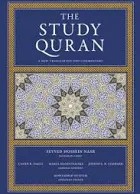
This tension becomes especially visible in The Study Quran, a major modern English translation and commentary project published in recent years.
The project contains many verses translated in ways that openly affirm:
- the completeness of the Quran
- the sufficiency of the Quran
- and the authority of God’s words alone
Yet the structure of the work itself overwhelmingly depends upon post-Quranic Hadith and sectarian commentary traditions to explain and interpret the Quran.
The result illustrates one of the central religious contradictions of traditional Islam:
- affirming Quranic sufficiency verbally
while - functionally subordinating the Quran to later human authority.
The Quran’s Repeated Claim of Completeness
The Quran repeatedly presents itself as:
- complete
- fully detailed
- explained
- sufficient for guidance
The Study Quran itself translates these verses clearly:
“. . –We have neglected nothing in the book- . .” [6:38]
“(Say) ‘Shall I seek a judge apart from God, when it is He Who has sent down unto you the book, expounded?’” [6:114]
“The Word of Thy Lord is fulfilled in truth and justice. None alters His Words…” [6:115]
“We have indeed brought them a Book, which We have expounded with knowledge…” [7:52]
These verses are extraordinarily direct.
The Quran repeatedly presents itself as:
- fully explained
- complete in guidance
- sufficient for religious judgment
The Quran nowhere presents itself as:
- incomplete without Hadith
- dependent upon later scholars
- requiring centuries of external literature for its religious authority
The Quran’s Position on Hadith
One of the most striking realities is that the Quran repeatedly uses the Arabic word Hadith negatively when referring to religious authority outside divine revelation.
The Study Quran translators themselves render these verses clearly:
“So in what discourse (Hadith) after this will they believe?” [77:50]
“These are the signs of God that we recite unto thee in truth. So in what discourse (Hadith) after God and His signs do they believe?” [45:6]
“So leave Me with those who deny this discourse (Hadith).” [68:44]
“God has sent down the most beautiful discourse (Hadith), a Book…” [39:23]
The Quran repeatedly identifies itself as:
- the best Hadith
- the divine discourse
- the revelation to be followed
Yet traditional Islam elevated later human narrations into a parallel religious authority.
This tension lies at the heart of the problem.
The Contradiction Within “The Study Quran”
The irony of The Study Quran is that the translation itself repeatedly affirms Quranic sufficiency while the commentary structure largely undermines it.
The project contains:
- extensive Hadith citations
- sectarian legal opinions
- classical theological debates
- later interpretive traditions
The actual Quranic text becomes surrounded and filtered through centuries of inherited commentary.
As a result, the reader often encounters:
- the Quran through Hadith
rather than - Hadith through the Quran.
The practical authority shifts.
The Quran remains verbally supreme while human commentary becomes functionally dominant.
When Commentary Replaces Revelation
Commentary itself is not inherently wrong.
Historical material, linguistic discussion, and scholarly reflection may all be useful.
The deeper issue is authority.
When commentary becomes:
- necessary for understanding
- superior to plain Quranic statements
- or capable of overriding the Quran
then revelation itself becomes secondary.
The Quran repeatedly warns against elevating human religious authority beside God:
“They set up their religious leaders and scholars as lords beside GOD…” [9:31]
The danger is subtle.
The Quran may still be:
- recited
- praised
- displayed prominently
while actual religious authority shifts toward:
- scholars
- sectarian traditions
- inherited commentary
- Hadith systems
Sectarian Hadith and Sectarian Religion
One of the most revealing realities of Islamic history is that the major sects:
- agree on the Quran
but - differ through Hadith systems.
Sunnis, Shi‘as, and other sectarian groups all possess:
- the same Quran
- the same core text
Yet they derive radically different religious systems through differing Hadith traditions.
Thus sectarian division historically emerged not from the Quran itself, but largely from:
- external narrations
- inherited jurisprudence
- sectarian commentary traditions
The Quran repeatedly condemns sectarian fragmentation:
“Those who divide themselves into sects do not belong with you…” [6:159]
The Religion of Abraham
The Quran repeatedly calls religion:
- the creed of Abraham
- pure monotheism
- submission to God alone
The Study Quran itself translates:
“And who shuns the creed of Abraham, but a foolish soul?” [2:130]
“Rather [ours is] the creed of Abraham…” [2:135]
“Follow the creed of Abraham…” [16:123]
The Quran repeatedly centers religion upon:
- monotheism
- submission
- God alone
not upon massive layers of later religious literature.
No Distinction Among Messengers
The Quran repeatedly commands believers not to elevate one messenger into sectarian religious centrality.
The Study Quran translates:
“We make no distinction among any of them…” [2:136]
“We make no distinction between any of His messengers.” [2:285]
Yet traditional religion gradually became heavily personality-centered:
- Muhammad-centered sectarianism
- saint veneration
- scholar authority
- inherited religious hierarchies
The Quran consistently redirects authority back toward:
- God
- revelation
- and submission to Him alone.
The Desertion of the Quran
One of the Quran’s most sobering warnings states:
“And the Messenger will say, ‘O my Lord! Truly my people have taken this Quran for foolishness.’” [25:30]
The desertion of the Quran does not necessarily mean:
- abandoning the text physically
More often, it means:
- subordinating it
- surrounding it with competing authority
- filtering it through inherited traditions
- and drowning its direct message beneath later human commentary.
The issue is therefore not whether Muslims respect the Quran verbally.
The issue is whether the Quran remains the supreme religious authority in practice.
The Quran Alone as Criterion
The Quran repeatedly calls believers to derive religion directly in light of revelation itself.
The Quran describes itself as:
- fully detailed
- clarified
- complete
- and sufficient for guidance
Historical material and commentary may possess value:
- linguistically
- historically
- academically
But no external source can override, redefine, or function as co-authority beside God’s revelation.
The Quran remains the criterion.
Conclusion
The Study Quran illustrates a much larger religious problem within traditional Islam.
The Quran is repeatedly affirmed verbally as:
- complete
- sufficient
- fully detailed
Yet in practice, interpretation is often governed by:
- Hadith
- sectarian tradition
- inherited commentary
- and later human authority.
The result is that the Quran becomes surrounded, filtered, and frequently subordinated beneath layers of post-Quranic religious literature.
The Quran repeatedly warns believers against elevating religious authorities beside God and repeatedly presents itself as the fully detailed revelation sufficient for guidance.
The central question therefore remains:
If the Quran is truly:
- complete
- fully explained
- and the best Hadith
then why must later human authority function as the ultimate interpreter of religion?
Continue Your Study
These related studies examine different ways the Quran can become secondary to inherited tradition, simplified religious teaching, academic assumptions, or political ideology – and why religious claims should ultimately be tested against the Quran itself.
The Quran Hijacked Twice – By Critics and Traditionalists
Examine how critics of Islam and traditional Muslim authorities can arrive from opposite directions yet rely on the same post-Quranic traditions, leaving the Quran itself secondary.
When “Islam for Beginners” Is Not the Quran
Explore how introductory presentations of Islam can begin with inherited beliefs and practices rather than allowing newcomers to encounter the Quran and evaluate its message directly.
Modern Scholarship and the Quranic Proof
Consider both the contributions and methodological limits of modern Quranic scholarship, and whether an internally embedded Quranic proof can address questions that historical-critical methods do not consider.
When Religion Becomes Ideology – A Quranic Critique of Sayyid Qutb’s Milestones
Examine how religion can be transformed into a political ideology, and evaluate the influential ideas of Sayyid Qutb’s Milestones against the Quran itself.