Introduction
One of the most important questions a believer can ask is:
Who has the religious authority in the Quran to establish law?
Can scholars determine what is lawful and unlawful? Can clergy create religious obligations? Can religious leaders introduce new doctrines, rituals, or prohibitions? Can sincere and knowledgeable people speak on behalf of God without explicit authorization from Him?
The Quran provides a clear and consistent answer: God alone possesses authority in matters of religion.
While human beings may teach, advise, explain, remind, and govern worldly affairs, the authority to legislate religion belongs exclusively to God.
God Alone Is the Lawgiver
The Quran repeatedly emphasizes that religious authority belongs to God alone.
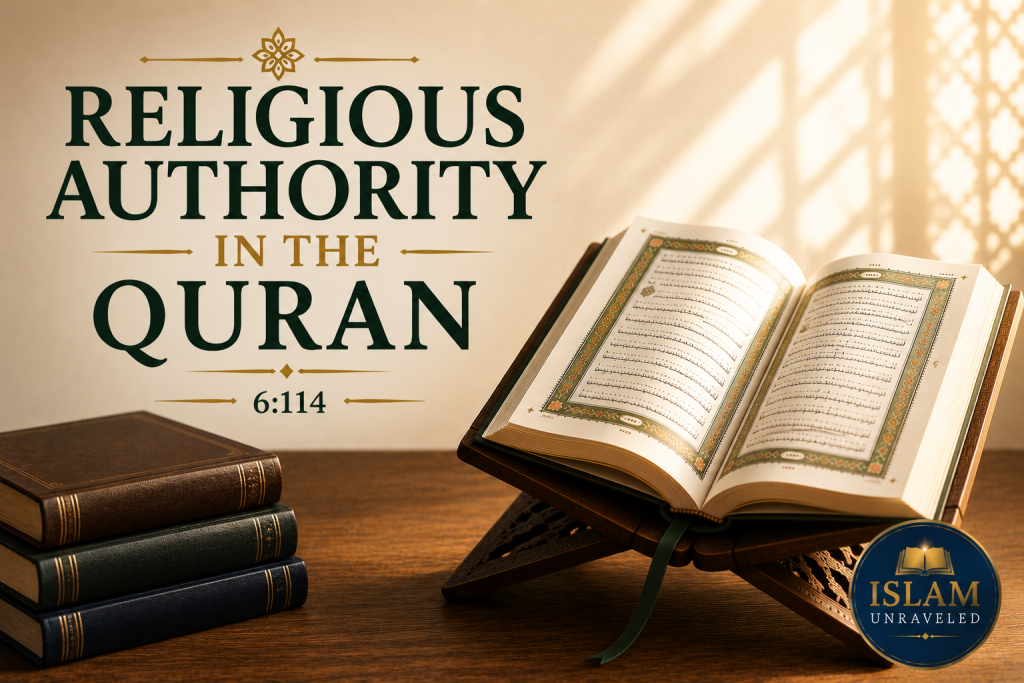
“Shall I seek other than God as a lawgiver, when He has revealed to you this book fully detailed?” (6:114)
This verse establishes a foundational principle. The believer is not instructed to seek religious law from scholars, traditions, councils, institutions, or inherited doctrines. God points directly to His revelation.
Likewise:
“Judgment belongs only to God. He has commanded that you worship none except Him. This is the correct religion, but most people do not know.” (12:40)
The phrase “judgment belongs only to God” extends beyond legal disputes. It establishes God’s exclusive authority to determine what is religiously required, forbidden, recommended, or permissible.
The Danger of Unauthorized Religious Laws
The Quran strongly condemns the creation of religious laws that God never authorized.
“Or do they have partners who legislate for them in religion what God has not authorized?” (42:21)
This verse presents unauthorized religious legislation as a form of association with God. The issue is not merely error; it is assuming a role that belongs exclusively to the Creator.
Whenever human beings introduce religious obligations, prohibitions, rituals, holy days, doctrines, or requirements without God’s authorization, they enter territory reserved for God alone.
Scholars Are Not Lords
The Quran warns against elevating religious leaders to positions that belong only to God.
“They took their scholars and monks as lords besides God…” (9:31)
The problem was not that people listened to scholars. Teaching and learning are encouraged throughout the Quran.
The problem was that religious authorities became sources of religious law and authority independent of God’s revelation.
This warning is not limited to Jews and Christians. The principle applies universally whenever believers allow religious figures to determine religious law apart from God’s revelation.
Messengers Deliver, They Do Not Legislate
The role of God’s messengers is often misunderstood.
Messengers deliver God’s message faithfully. They do not originate religious law.
“The sole duty of the messenger is the delivery.” (5:99)
“Follow what has been revealed to you from your Lord.” (7:3)
The authority belongs to the revelation, not to the personality of the messenger.
The Quran consistently directs believers back to God’s revelation rather than to independent human authority.
Human Authority Has Its Place
The Quran does not abolish all human authority.
Parents guide children.
Teachers educate students.
Judges settle disputes.
Governments administer worldly affairs.
Communities organize themselves through consultation.
However, there is a crucial distinction:
Human beings may administer worldly matters. God alone legislates religion.
Confusing these two spheres has produced much of the religious division and sectarianism that the Quran condemns.
Why This Matters
Many religious disputes ultimately arise from the same question:
Who has authority?
The Quran calls believers to return repeatedly to God’s revelation as the final criterion.
When religious authority is transferred from God to scholars, traditions, institutions, personalities, councils, or claimants, divisions inevitably multiply.
God’s religion remains one because its source is one.
“The judgment belongs to none but God.” (12:40)
“This is My path, perfectly straight, so follow it, and do not follow other paths lest they divert you from His path.” (6:153)
Conclusion
The Quran presents a simple and profound principle:
God alone possesses the authority to establish religion.
Human beings may teach, advise, explain, and administer worldly affairs, but no individual or institution has the right to create religious law, alter God’s commands, or impose doctrines that He did not authorize.
The believer’s ultimate loyalty is not to a scholar, sect, institution, claimant, or tradition. It is to God and His revelation.
The more closely believers adhere to this principle, the closer they come to the pure worship of God alone.